New clients always get first 30-Min Booking free!

Steal 5 Wild Dog Enrichment Tricks from San Diego Safari Park for your Dog
Concerned that your dog is bored and stifled? Review how veterinary behavior staff at the San Diego Safari Park keep their wild dogs challenged and engaged.
7/18/20266 min read
Most great dog owners wonder, “is my dog bored or stifled?”
First…chill…
If you’re reading this post, you’re most likely a dedicated dog owner, already giving your pal some good fun.
But you might enjoy adapting a few of the San Diego Safari Park’s cool wild dog enrichment program tactics.
The behaviorists and veterinarians there have studied how enrichment, novelty, and social dynamics shape both physical health and mental resilience in Asian wild dogs. They translate these insights into daily practices like:

Nice video about the San Diego Safari Park's wild dog, the dhole, in his enriched habitat
🐶 rotating scents
🐶 introducing problem-solving feeding challenges
🐶encouraging cooperative behaviors
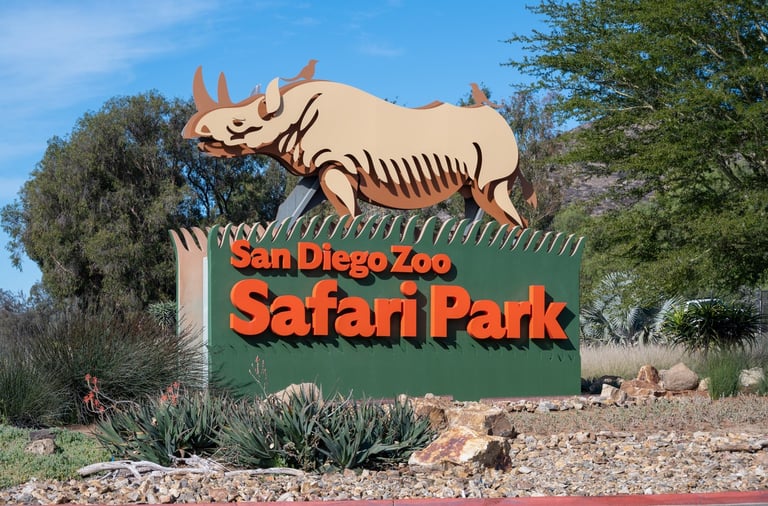
San Diego Zoo Safari Park’s Asiatic wild dogs, dholes, (as opposed to Aholes, which
I guess are hyenas?) get a mix of habitat design, water features, feeding strategies, and
training-based enrichment.
What is dog enrichment?
Dog enrichment is far more than just providing toys or activities. It's about understanding and meeting a dog's central needs: physical, behavioral, and instinctual.
The good news is that enrichment isn’t about doing more. It’s about doing a few things more intentionally. Thoughtful enrichment taps into natural drives like sniffing, foraging, chasing, chewing, and problem-solving. The great dog owners give their pups safe, structured outlets for those behaviors.
Why is dog enrichment important for my dog’s well-being?
When you borrow a few of these proven Safari Park wild dog enrichment strategies, you’re not just adding activity—you’re creating meaningful experiences that help your dog express his or her natural drives. That’s what truly reduces boredom, builds confidence, and replaces that nagging guilt with the reassurance that your dog’s needs are genuinely being met.
Dog trainers, veterinarians, and humane organizations heavily emphasize that daily enrichment improves behavior, reduces stress, and supports overall welfare. According to the Indoor Pet Initiative from The Ohio State University College of Veterinary Medicine,
“Environmental enrichment in companion animals can help prevent unwanted behaviors that can lead to relinquishment to shelters or considerations of euthanasia.”
Here are five ways the Safari Park does it—and how you can start using them today.
Habitat design and layout
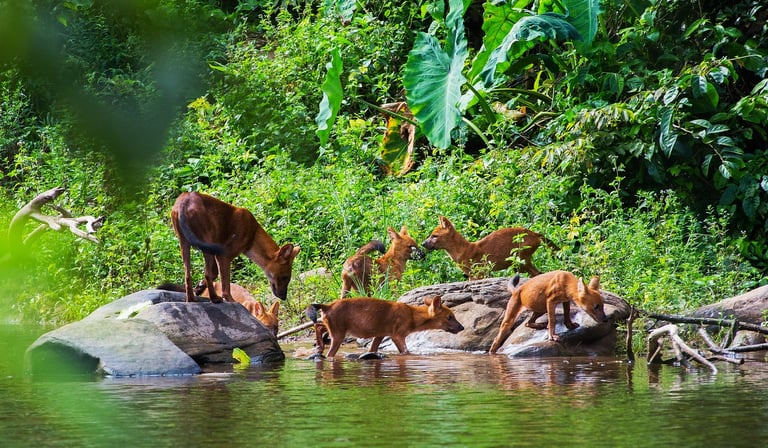
San Diego Zoo Safari Park’s dholes live in a repurposed large tiger exhibit in the Asian Savanna area, giving them ample room to run, patrol, and explore varied terrain. Their indoor “bedrooms” are arranged in a horseshoe, allowing lines of sight among pack members, a step that supports their strongly social, cooperative nature. Cool!
The exhibit perimeter is reinforced underground so staff can safely allow natural digging behavior instead of suppressing it.
Adapt this idea for your home
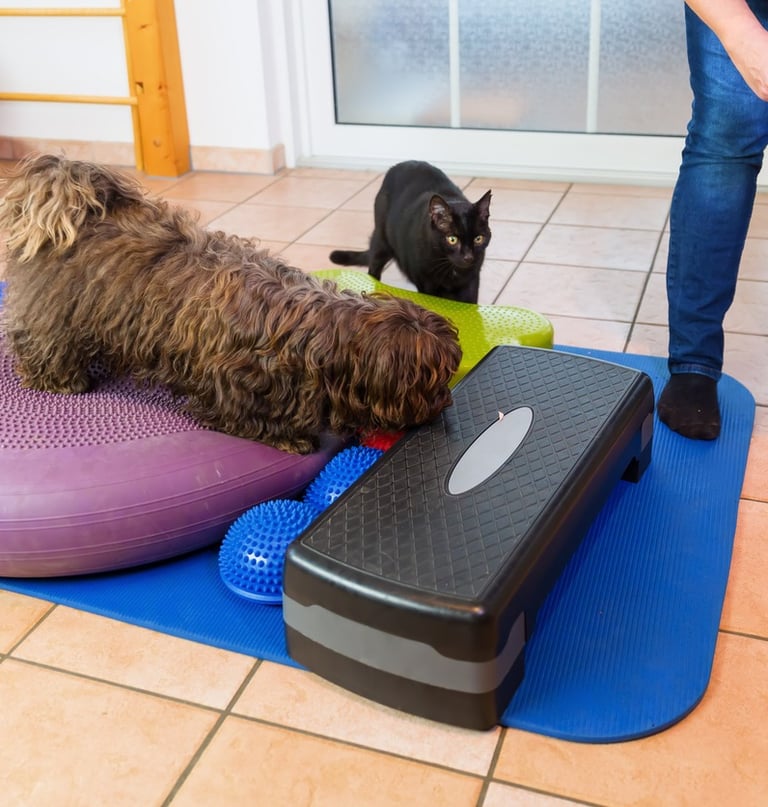
Create a “dog zone” with layered features rather than one flat space. Consider adding:
raised beds
a tunnel made from a kiddie tunnel or chairs and blankets
safe obstacles to step over or around.
Should you have a digger, consider creating a designated dig pit—using a kiddie pool or marked soil area—where you bury toys or treats. When you consistently redirect digging there, you satisfy that instinct in a less destructive way. Your Jack Russell Terrier and all terriers, beagles, and dachshunds will thank you! The Oregon Humane Society outlines how to train your dog to dig in a specified area.
Indoors, rotate small environmental changes so the dog periodically “re-explores” its own territory, instead of living in an unchanging box. You can:
move a bed to a new corner
add a low platform or step
rearrange toy locations


Water features
Because the Safari Park’s dholes are “devoted water lovers,” keepers retained and enhanced an existing pool for the dogs to swim, wade, and cool off. A shade structure over part of the pool makes that feature usable even in hot conditions, encouraging the animals to choose where to be based on comfort and preference.
Adapt this dog environmental enrichment idea for your home
Provide water‑based dog enrichment when appropriate. Your labs and retrievers will be slap-happy with this upgrade (but, then, aren’t they always?)
These dog water playmats look like tons of fun for dogs AND kids.
Add floating toys for dogs that enjoy splashing and pawing at water.
Structure water play and a drying routine so the dog gets their pool time without turning your house into a slip‑n‑slide.
Create a drying station and house entrance or in the laundry room. Keep towels specified for dog -- just like a fancy spa! Now your dog’s enriched. BTW - microfiber towels really do speed up drying.
If you want to go full 5-star hotel, they really do make dog drying robes.
Food‑based enrichment
At the San Diego Safari Park, each dhole receives a balanced ground‑meat canine diet, with whole prey items and bones added on a weekly basis to promote chewing and natural feeding behavior. Keepers feed in a strict dominance order, honoring pack hierarchy and reducing conflict while preserving social feeding dynamics.
A limited portion of their diet is “earned” through training behaviors (stationing, presenting paw, etc.). Main scheduled meals are delivered in a predictable way that respects the pack hierarchy.
Adapt this wild dog enrichment idea for your home
Replace some bowl meals with food puzzles or “scatter feeding,” such as hiding kibble around a room, tossing it in grass, using muffin‑tin games with tennis balls, or DIY puzzle boxes crafted from cardboard.
Offer safe chewing outlets—vet‑approved chews, stuffed Kongs, lick mats, or frozen food “blocks”—to tap into the natural need to gnaw, lick, and work at food over time rather than inhaling it in seconds.
Use treat‑based training sessions for part of daily calories, especially in multi‑dog homes, to manage arousal around food and reinforce calm behavior and impulse control.
Training as dog mental enrichment
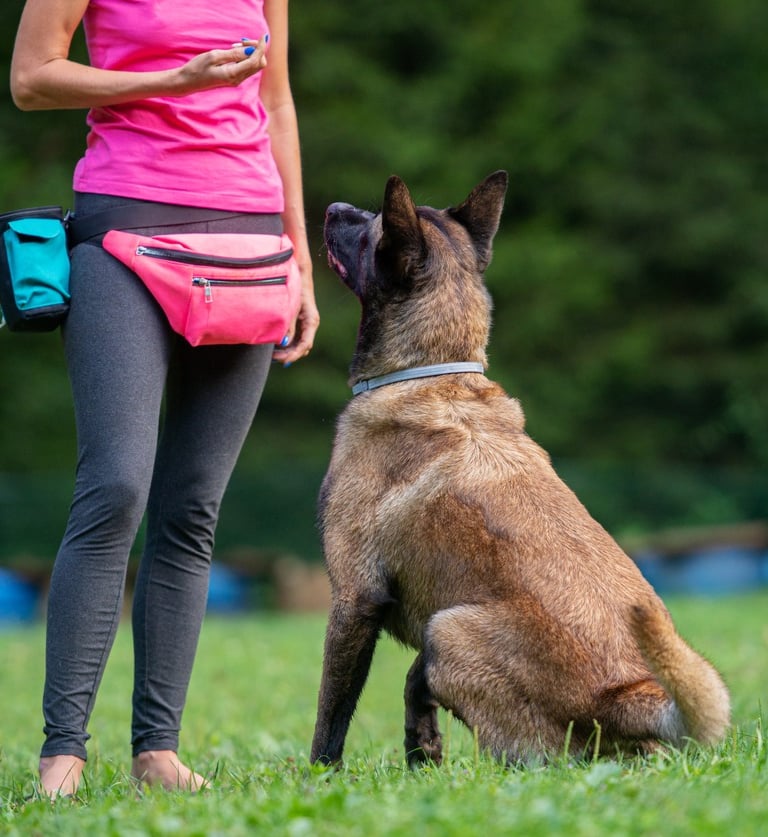
Safari Park staff use positive reinforcement to teach the dholes behaviors like sit, down, target, stand, present paw, and open mouth. Not only does training support medical care and daily management, these sessions function as structured enrichment. They demand concentration and problem-solving, while deepening the human–animal relationship.
Adapt this wild dog environmental enrichment idea for your home
Treat training as daily enrichment, not just obedience. Short 5–10 minute sessions teaching tricks and handling keep dogs mentally engaged.
Incorporate cooperative care techniques—letting your dog opt in to nails, grooming, or ear checks via stationing, mats, or specific cues—so “vet‑type” handling becomes predictable and rewarding rather than frightening.
Beagles, hounds and some other hunting dogs love scentwork and “find it” games where the dog searches for treats, toys, or even you. It’s a low‑impact, high‑value mental workout.
Broader dog enrichment philosophy at San Diego Safari Park
San Diego Zoo Wildlife Alliance emphasizes that enrichment should be “engaging and meaningful,” allowing animals to express species‑typical behaviors like exploring, problem‑solving, and working for food rather than just receiving toys. Replicating the cognitive and physical demands of hunting and foraging keeps their wild dholes healthy and relaxed enough to breed and grow their pack.
Additional dog environmental enrichment suggestions
Plan for daily enrichment “categories” instead of random toys: include at least one sniffing/foraging activity, one chewing or licking activity, and one structured interaction (training or play) per day.
Rotate toys and enrichment objects so they stay novel and interesting, and add sensory variety via safe scents (like dog‑safe herbs), different textures, and sound‑producing items for dogs who enjoy auditory stimulation.
Remember that enrichment is about agency: offer choices (multiple resting spots, several toy options, variable walking routes) so the dog can influence its own environment rather than being passively managed.
When you borrow a few of these dhole-inspired tactics—layered habitats, water features, scent rotations, problem-solving food games, and cooperative play—you’re not “spoiling” your dog; you’re thoughtfully meeting their natural needs in ways that make home life calmer and more joyful.
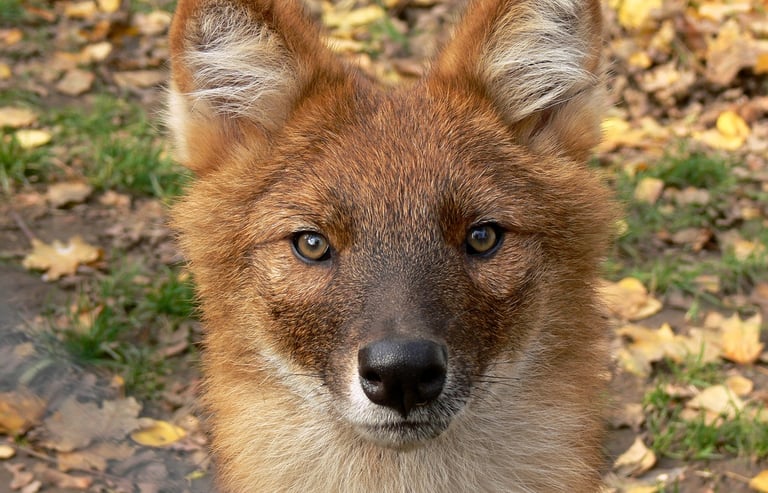
A juvenile dhole
Backup for engaged pet parents: Countryside Pet Sitting
You don’t need a giant exhibit or a zoo endowment budget to enrich your dog’s daily routine.
A rearranged “dog zone,” a kiddie-pool dig pit, a simple water play setup, and 5–10 minute daily training or handling sessions can give your dog the same core benefits the dholes enjoy: more choice, more confidence, and more healthy outlets for instinctual behaviors.
If you're still concerned, read my How Much Stimulation Does My Dog Really Need? post. Reassure yourself that a few simple adjustments make a meaningful difference.
If you ever need help designing a routine that fits your real life in Escondido, Valley Center, Bonsall and Vista, Countryside Pet Sitting in North Escondido is here to support you and your dog so that every day feels a little more like a thoughtfully enriched Safari Park, and a little less like a boring box. Care to stay up to date on your life with your dog? Subscribe to our monthly newsletter.
suz@countrysidepetsitting
760-239-9936
© 2025. All rights reserved.








Menu Credentials Contact Us Sign Up for Email